
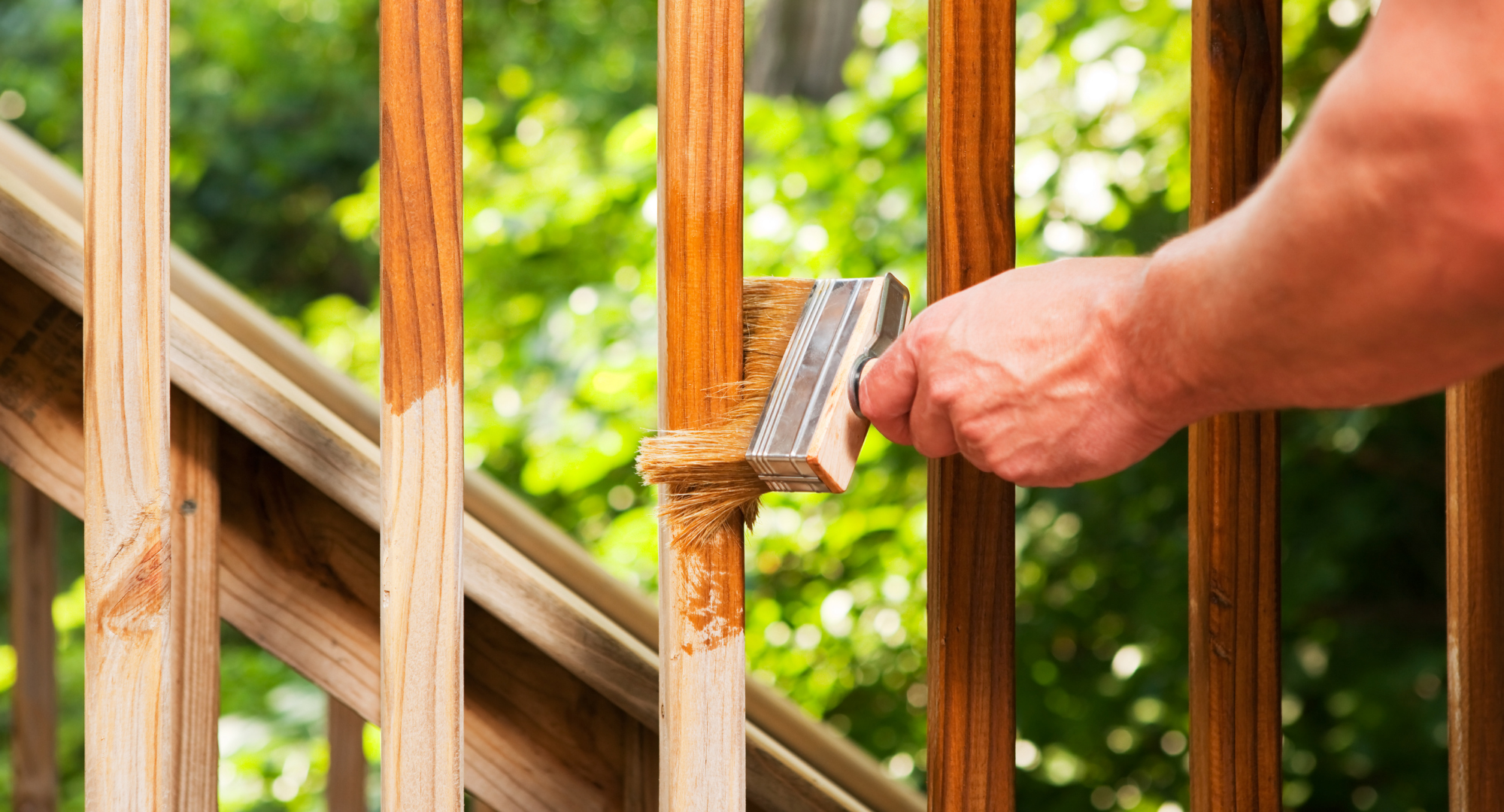
Ever wonder why your deck railing feels a little looser every time someone leans on it?
A wobbly, rotting, or outdated railing is more than an eyesore — it’s a safety problem. Here’s exactly what deck railing replacement costs in Kansas City, what your material options are, and what the code says, so you know the real numbers before you call anyone.
What Most Kansas City Homeowners Pay for Deck Railings
Pricing last updated: September 2026
| Railing Type / Scope (LF = linear foot) | Typical Price Range (Labor + Material) |
| Pressure-treated wood railing — per LF | $75 – $125/LF |
| Wood rails with aluminum balusters — per LF | $90 – $140/LF |
| Composite railing (Trex, TimberTech) — per LF | $110 – $175/LF |
| Powder-coated aluminum railing system — per LF | $100 – $175/LF |
| Cable railing system — per LF | $150 – $225+/LF |
| Short railing section (6–10 LF) | $800 – $1,300+ |
| Stair railing — per LF along the stairs | Typically 25%–40% more per LF than comparable level deck railing |
What an average deck with 40 LF of railing replacement costs, by material
| Material (40 LF of railing) | Typical Full Replacement Price |
| Pressure-treated wood | $3,000 – $5,000 |
| Wood rails with aluminum balusters | $3,600 – $5,600 |
| Composite | $4,400 – $7,000 |
| Powder-coated aluminum | $4,000 – $7,000 |
| Cable | $6,000 – $9,000+ |
These prices assume we remove your existing railing, your deck framing is structurally sound, access is standard, and the new railing is at a typical residential height. They include new posts, rails, balusters, and standard disposal of the old railing. Structural framing repairs, extensive post reinforcement, permits, difficult second-story access, gates, and lighting can increase the price. Stair railing costs more than level railing (see below), and the more complex the stairs, the higher the price can be.
What Affects the Price of Deck Railing Replacement
Railing prices depend on more than the material. Here’s what moves your price up or down:
- Material. This is the biggest factor. Pressure-treated wood costs the least and cable railing costs the most. Composite and aluminum fall in between.
- Brand and product line. Even within the same material, prices vary considerably by manufacturer and product line. Brands like Trex, TimberTech, and Deckorators sell everything from entry-level systems to premium ones with heavier parts, upgraded finishes, concealed fasteners, longer warranties, and pricier posts, caps, and accessories. Some systems also install faster than others, so two similar-looking railings can have noticeably different installed prices.
- Length and layout. More corners, angles, and gates mean more cuts and more time. Short jobs also cost more per foot, because removing the old railing, setting up, and hauling away debris take about the same effort whether the job is 8 feet or 40.
- Removing the old railing. Tearing out the old railing and hauling it away takes time. It’s included in the prices above.
- Deck framing and post attachment. New posts have to attach to solid framing. If the framing is soft or rotted, it must be repaired first, and extra post reinforcement adds cost too.
- Height and access. Second-story decks, steep yards, and tight spaces slow the work and raise labor costs.
- Stairs. Stair railing typically costs 25%–40% more per linear foot than comparable level deck railing. There is always an upcharge for stairs, and how much depends on how difficult your stairs are. Landings and L-shaped or U-shaped stairs are harder to install than a straight run, so the more complex the stair layout, the more the railing costs.
Why stair railing costs more. Stair railing requires considerably more layout and installation time than level railing. Rails must be cut to the stair angle, balusters must be individually fitted while maintaining proper spacing, and the top and bottom transitions require additional layout and fastening. Depending on the railing system, stair sections may also require specialized brackets, hardware, and a separate graspable handrail.
Example: If a particular level railing system costs approximately $120 per linear foot installed, the same railing on a stairway may cost approximately $150–$170 per linear foot.
Railing Material Options
Pressure-Treated Wood
Most economical. Matches existing wood decks. Requires staining and sealing every 2–3 years. Prone to checking and splitting over time. Best for budget-conscious projects or decks being refreshed before a sale.
Note: New pressure-treated lumber needs to dry enough before you apply stain. Drying time depends on the lumber type, the treatment, and the weather and season, so the wood’s moisture level—not a set number of months—tells you when it’s ready.
Wood Railing with Aluminum Balusters
One of the most popular upgrades we install in Kansas City. Wood posts and rails with powder-coated aluminum balusters. Clean, modern look. The balusters won’t rot or splinter. Very durable for the cost.
Composite Rails with Wood or Composite Posts
Mid-range cost. Low-maintenance top and bottom rails with composite balusters. Matches composite decking if you’ve already upgraded your deck boards. Does not rot or splinter.
Powder-Coated Aluminum Railing System
A complete railing made of powder-coated aluminum — posts, rails, and balusters. It won’t rot or need staining or painting, and it only needs an occasional wash. Clean, modern look. It costs more than a wood railing and lands in about the same range as composite.
Cable Railing
Premium option. Stainless steel cable runs horizontally between posts, creating an open, modern look with unobstructed views. The highest material and labor costs. Requires substantial posts (typically 4×4 or larger with proper hardware) to handle cable tension.
Code Requirements You Need to Know
Most Kansas City-area cities base their residential building codes on the International Residential Code (IRC), but each city can make its own changes.
A quick note on terminology: Building codes use a technical term for the protective railing along the open edge of a deck. They call it a “Guard”. Most homeowners and contractors call it a “Railing”, so we’ll use that term from here on.
Here are the basics for a typical one- or two-family home:
- When a railing is needed: A railing is generally required when the deck surface is more than 30 inches above the ground or floor below.
- Railing height: When a railing is required on a home deck, it’s generally at least 36 inches tall. Stair railings have their own height rules.
- Gaps between balusters: Openings are generally limited so a 4-inch ball can’t pass through. Different opening rules apply at certain spots along stairs.
- Deck railings vs. stair handrails: They aren’t the same thing. A handrail is the rail you grab while using stairs, and it has its own shape and height rules. Those grip rules apply to required stair handrails, not to every top rail on a deck railing, so wide, flat top caps are common. If a stair railing’s top rail also serves as the handrail, it has to meet the handrail rules.
- Post connections: Railing posts must be attached to the deck framing with code-approved hardware and methods. Fastening a post only to the deck boards on top isn’t a strong enough connection.
Local rules vary from city to city, so always check the requirements in your area. If your railing is loose, rotting, or doesn’t meet current standards, it’s more than outdated — it’s a safety risk. We build to the current code on every project.
Partial vs. Full Railing Replacement
If only one or two sections of railing are failing, we can replace just those sections. However, if your deck railings are all the same age and material, replacing one section often highlights how weathered the rest looks. We’ll give you an honest assessment of whether partial or full replacement makes more sense for your specific situation.
How Our Pricing Process Works
You just read our actual pricing — that’s the Focus Handyman way. We believe you deserve real numbers before you ever pick up the phone. When you call us, you already know what to expect.
From there, we inspect your deck, confirm the measurements and the material you want, and give you a detailed scope of work with one clear price, so you know exactly what’s included.
DIY vs. Hiring a Pro
DIY makes sense when:
- You’re replacing like-for-like on a straightforward wood railing
- You’re comfortable with post hardware and code requirements
- The deck is at ground level with easy access
- You have the tools and experience to replace the railing
Hire a Pro when:
- Cable railing — requires specific tensioning tools and hardware
- Composite systems — installation sequences vary by brand
- You need it to be code-compliant
- Posts need to be re-anchored to the framing
- You don’t have the proper tools, experience, or confidence to do the work safely
Frequently Asked Questions
How do I know if my railings are up to code?
Start with a tape measure. On a deck more than 30 inches off the ground, railings are generally at least 36 inches tall, and a 4-inch ball shouldn’t fit through any opening. Stairs have their own rules, and each city can add its own, so confirm the requirements with your local building department.
Why is my deck railing wobbly?
Wobbling usually comes from loose fasteners, worn hardware, rotted posts or rails, or weak deck framing under a post. Push on the railing and watch where the movement starts to narrow it down. Because a railing is a safety item, a loose one should be inspected and repaired promptly, not ignored.
Can I mix materials, such as composite rails with wood posts?
Yes, and it’s a common approach. Wood posts are easier to attach solidly to the deck frame, while composite rails and balusters give you low-maintenance surfaces where weather does the most damage. Check the brand’s installation instructions first, since some systems are designed to work only with their own posts.
What’s the most popular railing upgrade in Kansas City right now?
Wood rails with aluminum balusters are one of the most popular upgrades in Kansas City. They cost more than basic pressure-treated wood but usually less than composite or cable, and the balusters won’t rot or splinter. For many homeowners, it’s the best balance of cost, looks, and lifespan.
How much does it cost to replace just one section of deck railing?
A short section, about 6 to 10 feet, typically runs $800 to $1,300 or more. Short jobs cost more per foot because removal, setup, and hauling take about the same effort as a bigger job. The material you choose and how the new section is attached also affect the final price.
How much more does stair railing cost than level railing?
Stair railing typically costs 25% to 40% more per linear foot than comparable level deck railing. Rails are cut to the stair angle, each baluster is fitted individually, and the top and bottom of the stairs need extra layout and fastening. The upcharge grows with stair difficulty: landings and L-shaped or U-shaped stairs cost more than a straight run.
What’s the difference between a deck railing and a handrail?
A railing runs along the open edge of a deck to keep people from falling. A handrail is a graspable rail you hold while using stairs. Handrails have shape and height rules for a good grip, but railing top rails generally don’t have to be graspable, so wide, flat caps are common.
How long should I wait to stain new pressure-treated railing?
There’s no set number of months, but it typically takes 2 to 6 months, depending on the season. What matters is moisture: most stains and paints go on best when a moisture meter reads about 15% or less. Some lumber is kiln-dried after treatment and dries much sooner.
Ready to Schedule?
Focus Handyman serves the greater Kansas City metro, including Overland Park, Leawood, Lenexa, Shawnee, Olathe, Lee’s Summit, Blue Springs, Belton, Raymore, Liberty, Gladstone, and surrounding areas.
Focus Handyman is an insured handyman company serving Kansas City homeowners, business owners, realtors, and property managers. Our technicians are company employees — and every job is backed by our 3-year workmanship warranty.