
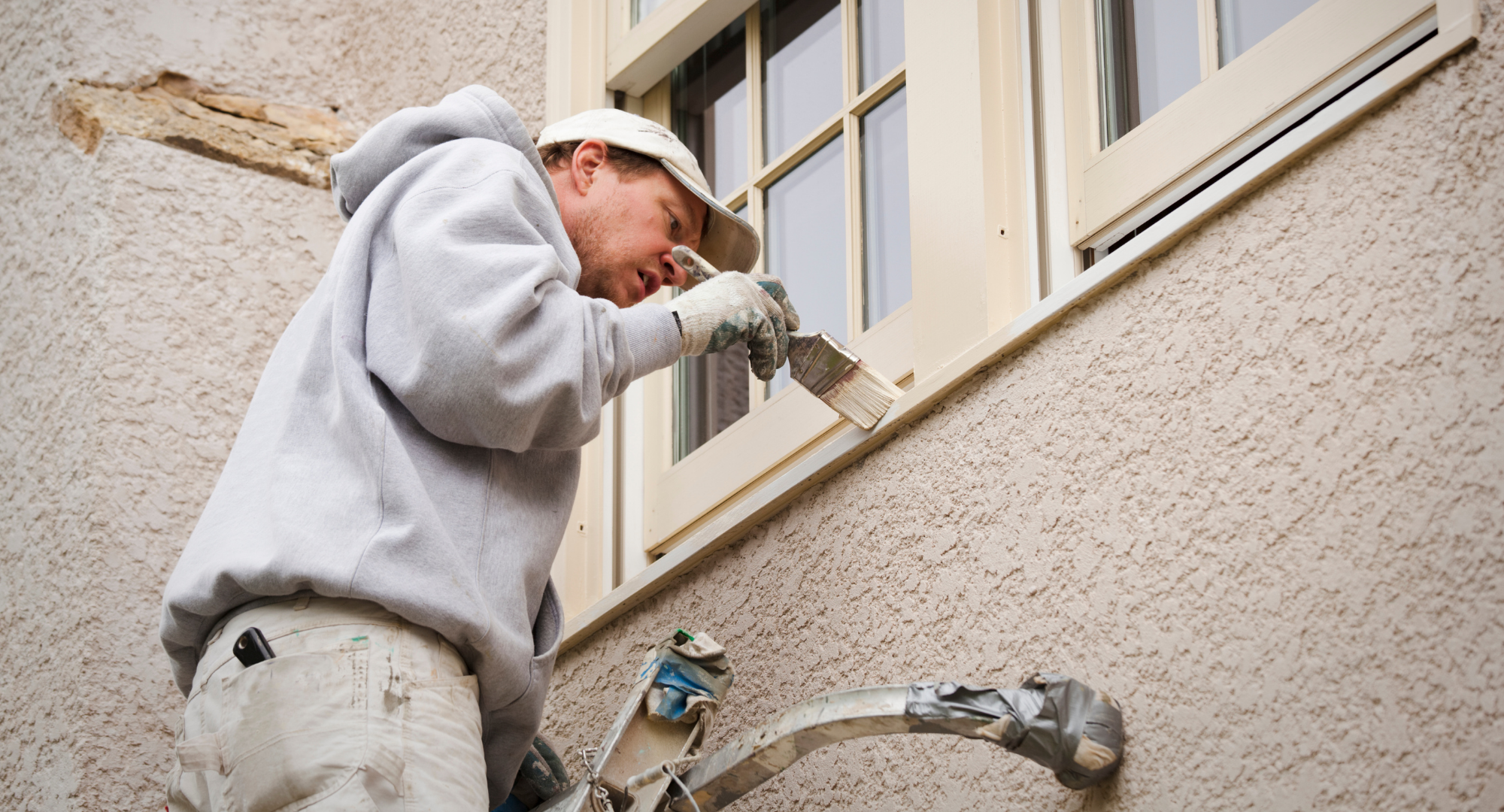
Ever wonder why the same corner of your house always seems to need attention? Corner boards, band boards, and decorative exterior trim are especially vulnerable at joints, seams, and exposed end grain. When caulk, flashing, paint, or other water-management details fail, those locations can stay wet long enough for decay to begin. Here’s what trim rot repair actually costs.
Kansas City Pricing
Pricing last updated: September 2026
| Exterior Trim Repair Type | Typical KC Price Range | Notes |
| Localized nonstructural epoxy repair | $350 – $650 | Small, localized area with sound wood remaining |
| Small trim-board replacement | $400 – $800 | Short, accessible standard trim repair |
| Localized larger-section replacement | $600 – $1,300 | More involved section, joints, or matching required |
| Full trim-board run replacement | $900 – $2,200+ | Typical accessible full-length board |
| Multiple separate trim areas | $1,500 – $4,500+ | Several repair locations bundled into one project |
| Extensive/whole-elevation trim replacement | $3,000 – $8,000+ | Significant trim replacement across one elevation |
| Localized repair with sheathing/framing involvement | $2,000 – $5,000+ | Concealed deterioration behind trim; widespread structural damage can cost more |
Most single-area exterior trim repairs in Kansas City run about $400 to $1,300. Small cosmetic spots cost less, while full board runs, multiple trim areas, or damage reaching structural sheathing can push well above that.
These ranges include typical removal, carpentry or epoxy repair, sealing, priming, and painting of the repaired area. Second-story work, difficult roof access, specialized trim profiles, lift requirements, lead-safe work, concealed damage, and premium replacement materials can increase the price.
What Affects the Price
How far the rot has spread: Surface rot caught early costs a fraction of rot that’s worked its way behind the trim into the sheathing.
Trim location and profile: A plain corner board is simpler to replace than decorative rake, frieze, or gable trim with a custom profile.
Length of affected trim: The amount of material matters, especially on longer runs, but exterior trim repair isn’t priced by linear footage alone. Height, profile, access, number of joints, surrounding siding, and finishing requirements can have just as much impact on the final price.
Accessibility: Second-story trim, gables, dormers, steep rooflines, and areas requiring specialized ladder or lift access typically cost more and may exceed the ranges shown.
Replacement material: Standard wood trim is usually less expensive upfront, while cellular PVC, engineered trim, and specialty materials can cost more. Material choice also affects installation details, painting requirements, expansion and contraction, and long-term moisture resistance. In repeatedly wet or rot-prone locations, a non-wood replacement may sometimes make sense.
Paint and finish matching: Every trim repair includes appropriate priming and painting of the repaired area, matched to the existing color as closely as practical.
Underlying cause: If failed caulking, flashing, or a siding gap is letting water behind the trim, addressing that is part of doing the repair right the first time.
Number of affected areas: Multiple trim areas around the house are typically priced as a bundled job, which lowers the per-area cost.
Age of the home / existing paint: Homes built before 1978 may require additional lead-safe work practices when painted surfaces are disturbed. When applicable, containment, cleanup, and documentation can add labor and cost to the project.
How Our Pricing Process Works
The ranges above are the budget numbers we use for typical Kansas City exterior-trim repairs.
Once we’re on-site, we confirm the exact length, access, and depth of the damage, because concealed deterioration can change the final scope.
DIY vs. Hiring a Pro
A small, shallow soft spot on a corner board or casing is a manageable weekend project with a wood hardener and two-part epoxy filler, plus sanding and repainting, provided the damage is nonstructural, the remaining wood is sound, and the source of moisture has been corrected.
Where it gets tricky: decorative or custom trim profiles that are hard to replicate, second-story or gable work, or any rot you find once you start opening things up that’s worse than expected. If the trim feels soft along its full depth rather than just the surface, that’s a sign to call a pro.
Frequently Asked Questions
What’s the difference between trim and siding?
Trim refers to the boards that frame and accent your home’s exterior: corner boards, band boards, window and door casing, and decorative elements like frieze or rake boards. Siding is the larger surface covering the walls themselves. The two often meet at a joint that’s a common spot for water intrusion.
Why does my corner board keep rotting in the same spot?
Corner boards have multiple joints, cut ends, and siding transitions where water can enter if the original detailing, paint, sealant, or flashing deteriorates. If the same spot repeatedly rots after repair, the moisture path needs to be identified rather than simply replacing the board again.
Can rotted trim lead to damage behind the siding?
Yes. If the water source that damaged the trim continues, moisture can also reach adjacent siding, sheathing, or framing. The concern isn’t that rot simply jumps from one board to another; it’s that nearby materials exposed to the same persistent moisture can also begin to decay.
Do you match custom or decorative trim profiles?
Yes, when possible. We can often mill or source a matching profile for corner boards, band boards, and other trim. If an exact match isn’t available, we’ll show you the closest option before starting the repair.
Can you replace rotted wood trim with PVC?
Often, yes. Cellular PVC can be a good option in areas that repeatedly see moisture because the material itself doesn’t decay like wood. It isn’t automatically the right choice everywhere, though. Existing profiles, siding details, thermal movement, fastening, paint requirements, and appearance all need to be considered before changing materials.
Why does LP SmartSide trim seem to rot so quickly, especially at the corners?
LP SmartSide and similar engineered wood trim ships with a primed, sealed factory edge. Once it’s cut to fit, at a corner, window, or door, that cut edge loses its seal. If it isn’t reprimed and caulked properly, especially along the bottom edge, it absorbs water and swells or rots far faster than the rest of the board.
How long does exterior trim repair take?
A small, localized repair typically takes half a day. Full board runs usually take one to two days, and multiple trim areas across a home’s exterior can take two to four days depending on access and painting.
What causes wood rot in Kansas City homes specifically?
Kansas City’s hot summers, strong storms, winter freeze-thaw cycles, and large temperature swings put repeated stress on exterior paint, caulk, and sealant joints. As those materials age, small gaps can open around doors and trim. The weather itself doesn’t automatically cause wood rot. The problem begins when water repeatedly enters those gaps and the wood stays wet long enough for decay fungi to become active.
What are the most common causes of wood rot on Kansas City homes?
The most common culprits we see are failed caulking, peeling paint, improperly flashed windows and doors, water running behind fascia or trim, clogged gutters, roof leaks, wood installed too close to soil or concrete, and unsealed cut edges. Rotten wood is usually just the symptom; the moisture source is the real problem.
Why do some homes experience wood rot much quicker than others?
A lot of it comes down to material quality, installation, and exposure, not just the wood. Lower-performance or incompatible sealants and coatings may fail sooner, but product quality is only part of the equation: proper surface preparation, joint design, material compatibility, and installation matter just as much. That combination is why some homes show rot years before others.
How do you choose which caulking and paint to use?
We review manufacturers’ product data sheets before adopting any caulking, paint, or sealant, comparing movement capability, adhesion, substrate compatibility, service temperature, cure requirements, and paintability rather than just price. We only use products proven to hold up to this climate over time, because the material protecting the wood matters as much as the repair itself.
Do you match the paint color when you repair wood rot?
Our technicians use digital color-matching tools to identify a close match to the existing finish. Because older paint changes with UV exposure, weathering, and age, an exact invisible match isn’t always possible. Sheen and surface texture also affect the final appearance, and we’ll point out when a repair is likely to remain noticeable.
Is wood rot covered by homeowners insurance?
Usually not. Most policies treat wood rot as gradual deterioration or a maintenance issue rather than a covered peril. If the rot resulted from a sudden event, like a burst pipe or storm damage, related damage may be covered depending on your policy. Check your specific policy and contact your insurer or insurance professional. Otherwise, plan to budget for wood rot repair as routine maintenance.
Who do I hire to repair exterior wood rot?
For most exterior wood rot on trim, siding, fascia, soffit, window sills, or door frames, an insured handyman or carpentry company is the right call. These are repair jobs, not remodels, so one crew can usually diagnose, repair, and repaint in a single visit. Widespread structural decay or ongoing water intrusion may need a specialty contractor.
What should I look for in a wood rot repair company?
Look for a properly insured company with experience identifying both the damaged wood and the moisture source behind it. The scope should clearly explain what will be repaired or replaced, how the area will be sealed and finished, and what happens if concealed damage is uncovered. Photos and documentation of hidden conditions are also valuable.
Focus Handyman handles these repairs in-house, including carpentry, trim and fascia replacement, structural framing repairs, sealing, and painting. See current pricing and book online.
Ready to Schedule?
Focus Handyman serves the greater Kansas City metro, including Overland Park, Leawood, Lenexa, Shawnee, Olathe, Lee’s Summit, Blue Springs, Belton, Raymore, Liberty, Gladstone, and surrounding areas.
Focus Handyman is an insured handyman company serving Kansas City homeowners, business owners, realtors, and property managers. Our technicians are company employees, and every job is backed by our 3-year workmanship warranty.