
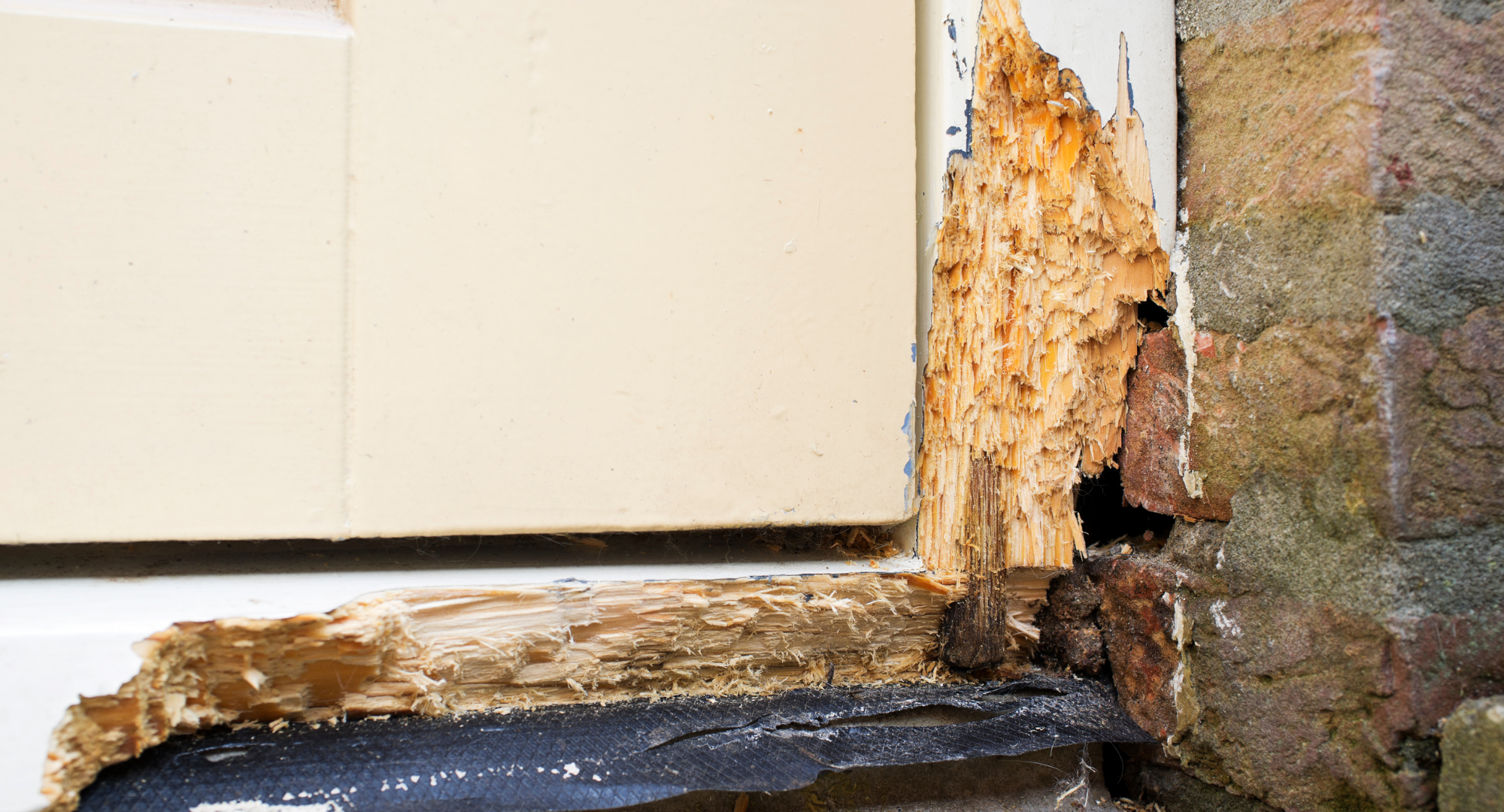
Ever wonder if that quote to replace the whole board was really necessary?
When exterior wood begins to rot, you often have two options: preserve the sound portion with an epoxy repair or remove the damaged component and replace it. The right choice depends on where the damage is, how much sound wood remains, what the component does structurally, and whether preserving the original piece actually saves money.
What “Epoxy Wood Repair” Actually Means
Depending on the wood’s condition, an epoxy repair may use a penetrating consolidant to stabilize remaining fibers, then a 2-part epoxy filler to rebuild the missing profile, followed by shaping, sanding, priming, and painting.
When Epoxy Can Actually Cost More Than Replacement
Epoxy isn’t automatically the less expensive option. On a standard trim board that can be removed and replaced easily, the labor required to excavate rot, stabilize the remaining wood, rebuild the profile, cure, sand, prime, and paint may equal or exceed the cost of installing a new board. Epoxy becomes especially valuable when the damaged area is localized, but the surrounding component is expensive, difficult to remove, custom-shaped, or otherwise worth preserving.
Kansas City Pricing
Pricing last updated: September 2026
| Repair Situation | Epoxy Wood Repair | Full Wood Replacement |
| Small localized nonstructural repair | $350 – $550 | $400 – $800 |
| Moderate localized nonstructural repair | $500 – $900 | $600 – $1,350 |
| Full standard trim/board section | Usually not the economical choice | $450 – $1,500+ |
| Custom, historic, or difficult-to-replace component | $600 – $1,500+ | Highly scope-dependent; often higher |
| Load-bearing structural framing | Not part of Focus’s standard epoxy repair service | $1,500 – $6,000+ depending on member and extent |
There is no fixed percentage or length of wood loss that automatically determines whether epoxy or replacement is correct. Epoxy works best when deterioration is localized, enough sound wood remains to support the repair, the component is nonstructural under our standard repair approach, and preserving the existing piece provides a practical advantage. Standard boards that are inexpensive and easy to remove are often better replaced even when an epoxy repair is technically possible.
Unless otherwise noted, both approaches include removing loose or deteriorated material, standard preparation, and priming and painting the repaired area to match.
Second-story or hard-to-access areas typically run toward the higher end of either range due to ladder and safety setup time.
What Affects the Price
How much sound wood remains: An epoxy repair depends on a solid base to bond to; once too much of the piece is compromised, there’s not enough sound material left to make repair the more durable choice.
Structural framing: Focus Handyman does not use standard epoxy wood-repair systems as a substitute for compromised load-bearing framing. When a joist, beam, post, ledger, or other structural member has meaningful decay, our normal approach is to reinforce or replace the affected structural member. Specialized engineered epoxy systems exist for certain structural restoration applications, but they fall outside the routine repairs covered here and may require engineering.
Long-term expectations: A properly designed and installed epoxy repair can last several years when the remaining substrate is sound and the moisture source has been corrected, but it isn’t identical to new wood; it’s a different material doing a similar job.
Paint vs. stain finish: Epoxy takes paint well and typically blends in once finished; on stained or natural-finish wood, a repaired spot may remain slightly visible.
Cure time and return visits: Some epoxy systems require curing before final shaping, sanding, priming, or painting. A small repair may therefore require more than one work stage even when the actual damaged area is limited.
Repeat repairs: If a previous epoxy repair is failing, we first determine why. Continued moisture intrusion, incomplete removal of deteriorated material, poor preparation, or an unsuitable repair location can all cause failure. Depending on what we find, the next step may be a properly executed epoxy repair or a full replacement.
Age of the home: Repairs on pre-1978 homes may require lead-safe work practices when painted surfaces are disturbed. When applicable, containment, cleanup, and documentation can add labor and cost. This can factor into the epoxy-versus-replacement decision, since replacement may disturb more painted surface than a localized repair.
How Our Pricing Process Works
The ranges above are the budget numbers we use for common Kansas City wood-rot repairs.
The final recommendation depends on how much sound wood remains, the location of the damage, access, the replacement material, and what becomes visible as deteriorated wood is removed. We explain the available repair options before expanding the scope.
DIY vs. Hiring a Pro
Small, shallow, cosmetic epoxy repairs on easily accessible trim are a reasonable weekend project with a wood hardener and two-part filler, plus sanding and repainting. Only consider DIY epoxy after you identify and correct the moisture source.
Where it gets tricky: anything near a structural connection, any repair where you’re not sure how much sound wood is actually left once you start opening things up, or any area that’s already been patched once before and is failing again.
Frequently Asked Questions
Is epoxy always cheaper than replacing the wood?
Not always. On a standard board that’s inexpensive and easy to remove, full replacement can cost about the same as, or less than, a labor-intensive epoxy repair. Epoxy tends to save the most money on components that are expensive, difficult to remove, or hard to replicate.
How big can an epoxy wood repair be?
There’s no fixed size limit. What matters is how much sound wood remains to support the repair, and whether rebuilding the missing material is still more practical than replacing the piece. Very large areas of loss usually favor replacement, but that’s a practical judgment, not a strict measurement.
Can epoxy be used on structural wood?
Focus Handyman doesn’t use standard epoxy wood-repair systems as a substitute for compromised load-bearing framing. When a joist, beam, post, or other structural member has meaningful decay, our standard approach is to reinforce or replace it rather than repair it with epoxy.
Why would you repair old wood instead of simply replacing it?
Preserving the original piece can matter when it’s expensive, difficult to remove, custom-milled, or otherwise worth keeping. In those cases, an epoxy repair that saves the surrounding material can be more practical and less disruptive than a full replacement.
Why would you replace a board if only part of it is rotten?
When a board is inexpensive and easy to remove, replacing the whole thing is often faster and cheaper than the labor required to excavate, rebuild, and finish an epoxy repair. The size of the rotten area isn’t always the deciding factor; labor cost is.
What happens if the rot is deeper than it looks once you start removing it?
This happens fairly often. If we find more deterioration than expected once we remove material, we’ll explain what we found and adjust the recommended repair before continuing, rather than assuming the original plan still applies.
How do you decide between epoxy and replacement?
There’s no universal percentage of wood loss that automatically determines the answer. We look at how much sound wood remains, how deep the deterioration extends, whether it affects fasteners or connections, the component’s function, and whether replacing the whole piece would be more reliable or economical than repairing it.
Is epoxy repair as strong as new wood?
The cured epoxy is highly resistant to moisture, but the surrounding wood can still decay if you don’t correct the original water source. A durable repair depends on both the epoxy system and proper water management. Because epoxy isn’t a substitute for structural wood, we don’t use it on load-bearing framing.
Does epoxy repair cost less than replacement long-term?
Sometimes. Epoxy can be very cost-effective when it preserves a large or difficult-to-remove component by repairing only a small damaged area. On simple, readily replaceable trim, however, full replacement may cost about the same, or even less, than a labor-intensive epoxy repair. The better value depends on the component, access, damage, and expected service life.
Can epoxy be stained, or does it need to be painted?
Epoxy repairs are typically painted rather than stained, since cured epoxy doesn’t absorb stain the way real wood grain does. On painted trim, this blends well; on natural or stained wood, a repaired area may remain somewhat visible.
How long does an epoxy repair last compared to replacement wood?
A well-executed epoxy repair can last many years, often matching the surrounding wood, provided you correct the moisture source. New replacement wood has its own service life depending on the material and finish, so neither option is permanent without ongoing maintenance.
What causes wood rot in Kansas City homes specifically?
Kansas City’s hot summers, strong storms, winter freeze-thaw cycles, and large temperature swings put repeated stress on exterior paint, caulk, and sealant joints. As those materials age, small gaps can open around doors and trim. The weather itself doesn’t automatically cause wood rot. The problem begins when water repeatedly enters those gaps and the wood stays wet long enough for decay fungi to become active.
What are the most common causes of wood rot on Kansas City homes?
The most common culprits we see are failed caulking, peeling paint, improperly flashed windows and doors, water running behind fascia or trim, clogged gutters, roof leaks, wood installed too close to soil or concrete, and unsealed cut edges. Rotten wood is usually just the symptom; the moisture source is the real problem.
Why do some homes experience wood rot much quicker than others?
A lot of it comes down to material quality, installation, and exposure, not just the wood. Lower-performance or incompatible sealants and coatings may fail sooner, but product quality is only part of the equation: proper surface preparation, joint design, material compatibility, and installation matter just as much. That combination is why some homes show rot years before others.
How do you choose which caulking and paint to use?
We review manufacturers’ product data sheets before adopting any caulking, paint, or sealant, comparing movement capability, adhesion, substrate compatibility, service temperature, cure requirements, and paintability rather than just price. We only use products proven to hold up to this climate over time, because the material protecting the wood matters as much as the repair itself.
Do you match the paint color when you repair wood rot?
Our technicians use digital color-matching tools to identify a close match to the existing finish. Because older paint changes with UV exposure, weathering, and age, an exact invisible match isn’t always possible. Sheen and surface texture also affect the final appearance, and we’ll point out when a repair is likely to remain noticeable.
Is wood rot covered by homeowners insurance?
Usually not. Most policies treat wood rot as gradual deterioration or a maintenance issue rather than a covered peril. If the rot resulted from a sudden event, like a burst pipe or storm damage, related damage may be covered depending on your policy. Check your specific policy and contact your insurer or insurance professional. Otherwise, plan to budget for wood rot repair as routine maintenance.
Who do I hire to repair exterior wood rot?
For most exterior wood rot on trim, siding, fascia, soffit, window sills, or door frames, an insured handyman or carpentry company is the right call. These are repair jobs, not remodels, so one crew can usually diagnose, repair, and repaint in a single visit. Widespread structural decay or ongoing water intrusion may need a specialty contractor.
What should I look for in a wood rot repair company?
Look for a properly insured company with experience identifying both the damaged wood and the moisture source behind it. The scope should clearly explain what will be repaired or replaced, how the area will be sealed and finished, and what happens if concealed damage is uncovered. Photos and documentation of hidden conditions are also valuable.
Focus Handyman handles these repairs in-house, including carpentry, trim and fascia replacement, structural framing repairs, sealing, and painting. See current pricing and book online.
Ready to Schedule?
Focus Handyman serves the greater Kansas City metro, including Overland Park, Leawood, Lenexa, Shawnee, Olathe, Lee’s Summit, Blue Springs, Belton, Raymore, Liberty, Gladstone, and surrounding areas.
📞 913-361-6800
Focus Handyman is an insured handyman company serving Kansas City homeowners, business owners, realtors, and property managers. Our technicians are company employees, and every job is backed by our 3-year workmanship warranty.