
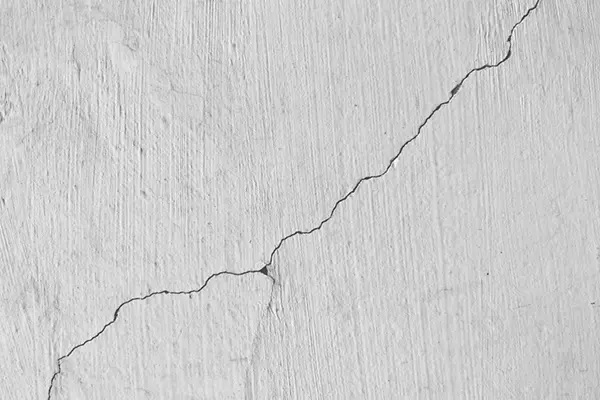
Drywall cracks are among the most common calls we receive from Kansas City homeowners — and among the most misunderstood. Not all cracks are created equal. Some are purely cosmetic, while others are signs of a bigger problem. This guide covers the difference and the cost.
What Kansas City Homeowners Typically Pay for Drywall Crack Repair
| Approximate Crack Length | Typical Price Range | What This Usually Covers |
|---|---|---|
| Up to 4 feet | $275 – $425 | Small isolated crack; standard prep, reinforcement, finishing and sanding |
| 5-10 feet | $375 – $575 | Longer wall or ceiling crack; tape/reinforcement and feathered finish |
| 11-30 feet | $575 – $900 | Long crack or failed drywall joint requiring more extensive finishing |
| 31-50 feet | $800 – $1,200 | Large continuous crack or multiple cracks in the same area |
| 50-100 feet | $1,250 – $2,000 | Extensive cracking, multiple failed seams or larger areas requiring repair |
Crack length is only part of the cost. Failed drywall tape, damaged corner bead, ceiling repairs, textured surfaces, difficult access, and cracks that continue to move or reappear can increase the price. Priming and painting are typically priced separately unless specifically included.
What Can Make a Drywall Crack More Expensive to Repair?
Length determines the size of the repair. Condition determines the difficulty. Here’s what typically moves a crack repair up or down within its price range:
- Hairline cracks are generally at the lower end of the range if they’re stable and cosmetic.
- A failed tape or a separated joint costs more because the loose tape must be fully removed and replaced; covering it is not a fix.
- Corner-bead cracks may require securing or replacing the metal or vinyl corner bead before the area can be refinished.
- Ceiling cracks typically cost more than a comparable wall crack, since overhead work is slower and requires more setup. Ceiling repair typically costs 20-40% more than wall repairs.
- Recurring cracks may require additional investigation before repair to confirm what’s actually causing them.
- Texture matching adds cost, since the repaired area must blend seamlessly into the surrounding wall or ceiling finish.
Not Every Crack Is a Drywall Problem
Stair-step cracking in brick or block, large diagonal cracks around doors or windows, or cracks that repeatedly return indicate movement in the structure itself. Those conditions may need to be evaluated before drywall repairs are made — call us, and we’ll tell you honestly whether a structural evaluation should come first.
Why Drywall Cracks Happen in Kansas City Homes
Kansas City’s climate and soil create specific conditions for drywall cracks:
- Seasonal temperature swings cause framing to expand and contract — hairline cracks along seams are very common
- Kansas City clay soil is expansive — it swells when wet, shrinks when dry, creating foundation movement that telegraphs to drywall
- Older homes with plaster and lathe have a different failure mode than modern drywall — cracks in older homes deserve more attention
- Drywall tape failure: tape that wasn’t properly embedded at installation eventually separates
The Repair Process
For Hairline and Standard Cracks
- Widen the crack slightly with a utility knife to create a good bonding surface
- Apply mesh tape or paper tape depending on the crack type
- Multiple thin coats of joint compound — feathered wide on each side
- Sand smooth, texture match, prime, paint
For Tape Separation
- Remove the failed tape completely — covering it is not a fix
- Prep the surface, re-embed new tape with compound
- Multiple coats, texture, prime, paint
For Corner Bead Cracks
- Assess whether the metal corner bead is damaged or just the compound over it
- Replace corner bead if dented or loose — repair compound if bead is intact
- Re-coat, sand, texture match, paint
Can Crack Repairs Be Permanent?
For cosmetic cracks in a stable area of the house — yes. A properly repaired crack with good tape bedding and feathered compound typically will not come back.
But most homes move, at least a little, while drywall doesn’t. Drywall is rigid — it doesn’t flex the way framing can. Normal seasonal movement (framing expanding and contracting, minor settling typical for a home’s age) is common in Kansas City and isn’t usually a sign of a structural problem. If that ordinary movement is what’s causing your crack, the repair itself will hold up fine — but the crack can still reopen over time because the house keeps moving slightly and the drywall can’t move with it.
That’s different from cracking caused by actual foundation damage — a sunken, shifted, or broken foundation. In that case, you need to correct the foundation issue first. Repairing the drywall before fixing the foundation just means the same crack will reopen, sometimes quickly, because the underlying movement was never addressed.
We’ll always tell you honestly what you’re likely dealing with before we start, and we recommend a structural evaluation if we see signs of foundation movement rather than normal settling.
How Our Pricing Process Works
You just looked at our actual Kansas City pricing for drywall crack repair — that’s the Focus Handyman way. We believe you deserve real numbers before you ever pick up the phone, not a vague “it depends” until a truck shows up. When you call us, you already know roughly what to expect, and we’ll confirm the specifics once we see the crack in person.
DIY vs. Hiring a Pro
Small, stable hairline cracks under a few feet are a reasonable DIY project if you’re comfortable with joint compound, sanding, and texture matching — mesh tape, a putty knife, and a few thin coats can handle a lot of minor cosmetic cracking.
Where DIY gets harder: matching texture on anything but a smooth wall, feathering compound wide enough that the repair doesn’t show as a shadow line once painted, and telling the difference between a crack that’s truly cosmetic and one that’s an early warning sign. Longer cracks, ceiling cracks, failed tape, and cracks near a door or window frame are also more failure-prone for a first-time repair, since the prep work matters as much as the finish coat.
If a DIY repair doesn’t hold, or the texture match is visibly off, that’s usually a sign it’s worth having it done the first time professionally.
Frequently Asked Questions
My crack keeps coming back. What does that mean?
It usually means one of two things: normal home movement, or an underlying foundation issue. Drywall is rigid and doesn’t flex, so if your home has typical seasonal movement, a repaired crack can reopen even though the repair itself was done correctly. If the cracking is tied to a sunken or shifted foundation, you need to correct the foundation first, or the crack will keep coming back. We’ll help you figure out which situation you’re in before recommending a repair.
How long does a drywall crack repair typically last?
For a cosmetic crack in a stable part of the house, a proper repair should hold permanently. If the crack is related to normal seasonal movement, it may need an occasional touch-up over the years even though nothing was done wrong. If it’s tied to foundation movement, the repair won’t last until the foundation issue itself is addressed.
Can I just use caulk?
For very small hairline cracks on a smooth wall, paintable caulk can work. For anything larger, or any textured wall, caulk alone looks worse than a proper compound repair.
Do you fix plaster cracks?
Yes. Plaster crack repair is similar but requires different materials. We work on both drywall and plaster walls throughout the Kansas City metro.
Is drywall crack repair priced by length or by crack type?
Primarily by length — that’s the clearest way for a homeowner to estimate cost, and it’s what our pricing table above is based on. Crack type and condition (failed tape, corner bead damage, ceiling location, texture matching) affect where you land within that range, but the length of the crack is what determines the size of the job.
Will priming and painting be included after the repair?
Not by default; priming and painting are typically priced separately from the drywall repair itself. Let us know if you’d like a paint-ready or fully painted finish included, and we’ll add that to your quote. The simple reason it’s not by default is that many homeowners want to paint themselves so providing it as a separate add-on is the best method, allowing the client to choose.
Is a stair-step crack in brick or block the same as a drywall crack?
No. A stair-step crack in masonry is a sign of movement in the structure itself, not a drywall problem, and we don’t repair it as part of a standard drywall crack job. If you’re seeing stair-step cracking, large diagonal cracks, or drywall cracks that keep returning, we recommend a structural evaluation before any cosmetic drywall work.
Ready to Schedule?
Focus Handyman serves the greater Kansas City metro, including Overland Park, Leawood, Lenexa, Shawnee, Olathe, Lee’s Summit, Blue Springs, Belton, Raymore, Liberty, Gladstone, and surrounding areas.