
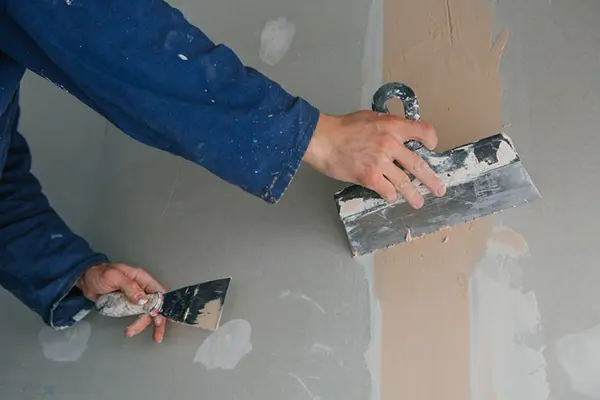
If your drywall is damaged, the real question usually is not simply whether to “repair it” or “replace it.” Most professional drywall repairs already involve removing some damaged material and installing new drywall. The better question is: how much should be repaired, and when does replacing a larger section—or an entire wall surface—make more financial sense?
For isolated holes, cracks, or small damaged areas, targeted repair is usually the practical choice. As damage becomes more widespread, repair labor can start to approach the cost of removing and replacing a larger continuous section. This guide explains how Kansas City homeowners can think about that decision, what typical projects may cost, and which conditions can change the price.
Quick Cost Guide: Repairing vs. Replacing Drywall
| Condition | Typical Approach | Typical Price Range |
|---|---|---|
| Small isolated hole, up to about 4 in. | Patch and finish the damaged area | $250–$400 |
| Medium or larger isolated hole (6-12”) | Cut out damaged drywall, install a patch, tape, finish, and sand | $450–$850 |
| Several repairs on the same wall | Repair individual areas or combine nearby damage into a larger repair | $650–$1,000+ |
| Larger damaged section | Remove and replace one continuous section of drywall | $500–$1,200+ |
| Extensive damage across most of one wall | Remove and replace most or all of the drywall surface on that wall | $1,000–$2,000+ |
| Significant water-damaged drywall | Remove compromised drywall and replace the affected area after the moisture source is corrected | $1,200–$3,000+ |
These are planning ranges for common Kansas City drywall projects, not a promise that every project will fall within them. The final cost can move up or down based on the size and number of damaged areas, wall versus ceiling work, texture, height and access, drying time, painting, and whether other repairs are required behind the drywall.
Important: What the drywall price does and does not cover
The ranges above describe the drywall portion of the work: removing damaged material when necessary, installing drywall, taping, applying joint compound, sanding, and preparing the repaired area for the next finish step. Texture matching, primer, painting, and repairs to plumbing, roofing, waterproofing, electrical, insulation, framing, or other underlying conditions can add to the total project cost.
When a Targeted Drywall Repair Usually Makes Sense
Repair is usually the best value when the surrounding drywall is sound, and the damage is limited to one area or several isolated areas. There is little reason to remove good drywall just to make a repair look “bigger” on paper.
- One or a few holes in otherwise solid drywall
- Impact damage with no ongoing moisture problem
- A localized crack, tape failure, or corner-bead problem that can be repaired without opening most of the wall
- Small water-damaged areas after the source of the moisture has been corrected and the affected material has been evaluated
- Repairs where the existing finish and texture can be reasonably blended without refinishing the entire wall
Some homeowners assume a wider patch — for example, cutting all the way from stud to stud — will be stronger or more durable than a smaller, properly backed patch. In practice, durability comes from the backing and fastening at the edges of the repair, not the patch size. A correctly backed 4” to 8” patch is just as structurally sound as a larger one going from stud to stud; going wider mainly adds cost and additional repair time, not strength, unless texture blending is the deciding factor.
When Replacing a Larger Section Can Make More Sense
There is no reliable rule that says a wall should automatically be replaced when a certain percentage is damaged. The decision is usually an economic one: how much labor will it take to make multiple individual repairs compared with removing one larger section and rebuilding it cleanly?
- Several damaged areas are close enough together that one larger repair is more efficient
- Water or moisture has softened, swollen, delaminated, or otherwise compromised the drywall
- Multiple seams, tape joints, or previous repairs are failing in the same area
- The wall needs to be opened anyway for plumbing, electrical, insulation, framing, or other work
- The existing drywall is deteriorated enough that small repairs would be difficult to anchor and finish reliably
When Replacing Most or All of a Wall Surface Can Be the Better Value
Full-wall replacement is much less common than targeted repair, but sometimes repairing every defect individually becomes an expensive way to preserve a poor wall. If a wall has widespread damage, numerous old patches, extensive moisture-related deterioration, or access work throughout the wall cavity, replacing most or all of the drywall surfaces may produce a more uniform result for a similar overall investment.
Why “Repair vs. Replacement” Is Not Always an Apples-to-Apples Comparison
A drywall repair often includes replacement. For example, repairing a 12-inch damaged area may require cutting out the broken drywall, installing backing, fitting a new piece of drywall, taping the joints, applying compound, sanding, and then matching the surrounding finish. That is technically replacement of the damaged material — just on a smaller scale.
That is why we think homeowners are better served by comparing the scope of work rather than asking for two artificial prices labeled “repair” and “replacement.” The goal is to remove only as much drywall as makes sense while still producing a durable, reasonable finished result.
The Hidden Cost of Repairing Too Much
Individual patches can become inefficient when the damage is spread throughout the same wall. Every repair can require cutting, backing, taping, multiple coats of compound, sanding, texture work, and paint preparation. At some point, the labor required to make many separate repairs may approach the cost of removing one larger continuous section.
That does not mean replacement is automatically better. It means a good estimate should compare the two scopes when the numbers are close and explain what the homeowner gains — or does not gain — by spending more.
The Hidden Cost of Replacing Too Much
The opposite can also happen. Removing an entire wall because of one or two repairable defects adds demolition, disposal, new drywall, finishing, and repainting that may not improve the final result enough to justify the cost.
For isolated damage in sound drywall, a properly executed local repair is usually the more sensible approach. If a contractor recommends broad replacement for a small, localized problem, it is reasonable to ask why the larger scope is necessary and what benefit it provides.
What About Water-Damaged Drywall?
Water damage requires one extra step before deciding on drywall: identify and correct the moisture source. That source might be plumbing, roofing, exterior water intrusion, a shower or waterproofing issue, or another building condition.
The drywall repair price should be treated separately from the cost of fixing the leak or moisture source. Once the source has been corrected, the damaged drywall can be evaluated to determine which areas are still structurally sound and which should be removed.
Drywall that has been materially affected by prolonged moisture or mold may need to be removed rather than patched. Significant mold conditions can also require specialized remediation depending on the extent and circumstances. We avoid making a blanket promise that every stained area must be removed — or that every stained area can safely stay — without first evaluating what actually happened.
Texture Can Change the Price
A smooth wall and a textured wall are not always the same repair. Standard textures such as orange peel are generally easier to reproduce than more involved finishes such as knockdown, popcorn, skip trowel, sand textures, or a custom texture created by a previous owner or contractor.
Texture matching can add labor and material cost, and an exact match is not always possible — especially on older walls where the original texture has been painted multiple times or was applied by hand. When texture is unusually difficult to reproduce, blending a larger area or refinishing more of the wall may be the better visual choice.
Painting Can Also Change the Final Cost
A repaired drywall area normally needs primer and paint if the goal is a finished wall rather than a paint-ready repair. Spot painting can work in some situations, but paint age, sheen, color, fading, and previous applications can make a local touch-up visible.
For that reason, some homeowners choose to paint the entire wall from corner to corner after the drywall work is complete. That is a finish decision rather than a requirement for every drywall repair, and it should be priced separately when appropriate.
How We Evaluate the Best Scope
When evaluating damaged drywall, the useful questions are:
- Is the surrounding drywall still solid and properly attached?
- Is there active or previous moisture, and has the source been corrected?
- How many damaged areas are there, and how close together are they?
- Will multiple small repairs take more labor than one larger repair?
- What texture or finish is on the existing wall?
- Is the damage on a wall or a ceiling, and how difficult is the access?
- Does the wall need to be opened for plumbing, electrical, insulation, framing, or another repair?
- Will the repaired area be painted locally, or will the entire wall be repainted?
Those questions give a homeowner a much better basis for comparing options than an arbitrary percentage of wall damage.
A Practical Example
Imagine one wall with several unrelated problems: multiple holes, a failed tape joint, and a section that was previously opened for plumbing. Repairing each area separately may still be the least expensive option. But if those repairs overlap or cover much of the same wall, removing one larger section can reduce the amount of patchwork and may create a more uniform finished surface.
The important point is that the lower price is not automatically the better value, and the larger scope is not automatically the better job. The right answer depends on the actual wall, the finish expectations, and how close the two scopes are in total cost.
Frequently Asked Questions
How do I know whether my drywall should be repaired or replaced?
Most isolated damage can be repaired. Replacing a larger section becomes worth considering when damage is widespread, several repairs overlap, the drywall has been compromised by moisture, or the wall needs to be opened for other work. There is no single percentage that automatically determines the answer.
Is a larger patch (stud-to-stud) more durable than a smaller one?
No. Durability comes from proper backing and fastening at the patch edges, not from the patch size itself. A well-executed 4- to 8-inch patch — squared off, with backing installed and screwed on all sides — holds just as securely as a 16-inch stud-to-stud patch, which still needs backing across its center span. Going larger doesn’t remove the need for backing; it just means more of it. In most cases, sizing a patch to the studs adds material and labor cost without adding strength or longevity. The one exception is texture: a larger patch can sometimes make a difficult texture easier to blend, which is a cosmetic reason to go bigger, not a structural one.
Will the repaired area match the rest of my wall?
A skilled drywall repair can often blend very well, but an exact match cannot be promised in every situation. Texture age, paint buildup, hand-applied finishes, lighting, and the size of the repaired area can all affect how noticeable the repair is.
Does drywall repair include texture?
That depends on the scope. Texture matching is additional work beyond simply bringing a patch to a smooth, paint-ready finish. Standard textures are usually easier to reproduce than heavy, hand-applied, or custom textures, so texture can change the price.
Does repaired drywall need to be painted?
Usually, yes, if you want a fully finished appearance. The drywall portion can be completed to a paint-ready condition, while primer and paint can be included or priced separately depending on the project. In some cases, painting the entire wall provides a more consistent appearance than touching up only the repaired area.
How long does drywall repair or replacement take?
Small repairs can sometimes be completed in one visit. Larger repairs, multiple coats of joint compound, texture work, high humidity, painting, or extensive replacement may require more drying time or a return visit. The number of calendar days is not always the same as the number of labor hours.
What if the drywall was damaged by a leak?
The leak or moisture source should be corrected before the wall is closed back up. The cost to repair plumbing, roofing, waterproofing, or another source of water is separate from the drywall restoration unless those items are specifically included in the project scope.
What if there is mold?
Drywall that has been materially affected by mold or prolonged moisture may need to be removed. The correct response depends on the extent of the condition, the moisture source, and whether specialized remediation is appropriate. We do not recommend simply covering a suspected moisture or mold problem with new joint compound.
Do you give exact drywall prices over the phone?
Articles like this are intended to give homeowners a realistic planning range before scheduling anything. An exact price depends on the actual size, location, texture, access, finish requirements, and condition of the drywall. For project-specific pricing, an on-site assessment is the most reliable way to define the scope.
Is the work backed by a warranty?
Focus Handyman backs its workmanship with a 3-year workmanship warranty. Product and material warranties, when applicable, are provided by their respective manufacturers.
The Bottom Line
For most Kansas City homeowners, isolated drywall damage is a repair project — not a reason to tear out an entire wall. Replacement starts to make more sense when the damage is spread out, the drywall itself is compromised, multiple repairs begin to overlap, or the wall needs to be opened for another reason.
The most useful estimate is one that explains the scope, what is included, what could change the price, and why a larger or smaller repair is being recommended. That gives you enough information to decide whether the additional cost of replacement actually buys you a better outcome.
Ready to Schedule?
Focus Handyman serves the greater Kansas City metro, including Overland Park, Leawood, Lenexa, Shawnee, Olathe, Lee’s Summit, Blue Springs, Belton, Raymore, Liberty, Gladstone, and surrounding areas.